

In the past decade, the UN has bemoaned the chronically low level of participation by Afghan women and girls in decision-making bodies and in secondary and higher education.
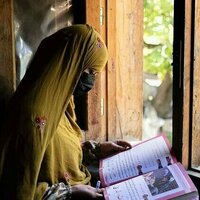
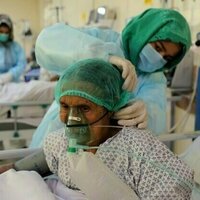
In a remote village clinic in the Bamyan Province in Afghanistan last week, a group of teenage girls were given potentially life-saving reproductive health advice, excited by the small kit of menstrual supplies they had been given.
Afghanistans Taliban rulers have followed through on decrees aimed at erasing women from public life in the country and restricting their freedom of movement, the UN mission to the country (UNAMA) said in itslatest human rights reportpublished on Thursday covering the first quarter of 2025.
But recently, the level of participation has reached a new low zero.
Zero women in national or local decision-making bodies.
Zero girls projected to be in secondary education following a December 2024 ban.
These numbers are part of the index released Tuesday by gender equality agencyUN Womenwhich is the most comprehensive study on gender inequality in Afghanistan since the Taliban resumed de facto control in 2021.
It paints a sobering picture of the state of gender equality in Afghanistan.
Since [2021], we have witnessed a deliberate and unprecedented assault on the rights, dignity and very existence of Afghan women and girls. And yet, despite near-total restrictions on their lives, Afghan women persevere, said Sofia Calltorp, UN Women chief of humanitarian action, at abriefingin Geneva.
Second-widest gender gap in the world
The report released by UN Women noted that while the Taliban regime has presided over unparalleled gender inequality, disparities existed long before 2021.
The issue of gender inequality in Afghanistan didnt start with the Taliban.Their institutionalised discrimination is layered on top of deep-rooted barriers that also hold women back, Ms. Calltorp said.
SoundcloudAccording to the index, Afghanistan currently has the second-worst gender gap in the world, with a 76 per cent disparity between womens and mens achievements in health, education, financial inclusion and decision-making.
Afghan women are currentlyrealizing only 17 per cent of their potential, and recent policies by the de facto government including the December 2024 ban on women in secondary education and the increasingly stringent restrictions on womens movement will perpetuate and perhaps worsen this under-realized potential.
Systematic exclusion and social effects
This sort of systematic exclusion of women from society at all levels not only impedes progress on theSustainable Development Goals(SDGs) and gender equality but also exacerbates poverty and instability more broadly, making it harder for the economy to diversify labour sources.
Afghanistans greatest resource is its women and girls.Their potential continues to be untapped, said UN Women Executive DirectorSima Bahous.
Right now, only 24 per cent of women are part of the labour force, compared to 89 per cent of men. Continued protracted economic strife has led to the number of women in the workforce increasing.
Overlapping economic, political, and humanitarian crises all with womens rights at their core have pushed many households to the brink. In response often out of sheer necessity more women are entering the workforce, Ms. Calltorp said.
Nevertheless, women are still predominantly working in lower-paid and less secure positions and are overwhelmingly responsible for all unpaid domestic work.
Ms. Calltorp noted that despite the devastating daily constraints that Afghan women face, they continue to advocate for themselves and their rights.
[Afghan women] continue to find ways to run businesses and advocate for their rights and the rights of all AfghansTheir courage and resilience spans generations, Ms. Calltorp said.
Stark choices
Alongside a deteriorating gender equality landscape, the aid outlook in Afghanistan is increasingly bleak with only 18 per cent of the 2025 humanitarian response plan for Afghanistan funded.
This is having tangible impacts on the ground, leading UN agencies and partners tocallfor action and funds.
Time and time again in Afghanistan, we have seen how donor support can be the difference between life and deathWe make an urgent appeal to donors to increase flexible, timely and predictable funding, they said.
Women, girls and other vulnerable groups are particularly impacted by these funding shortages 300 nutrition sites for malnourished mothers and children have shut and 216 gender-based violence points have suspended work impacting over one million women and girls.
The choices we make now will reveal what we stand for as a global community.If the world tolerates the erasure of Afghan women and girls, it sends a message that the rights of women and girls everywhere are fragile and expendable, Ms. Calltorp said.
Afghan women and girls havent given up, and we will not give up on them.
Soundcloud