

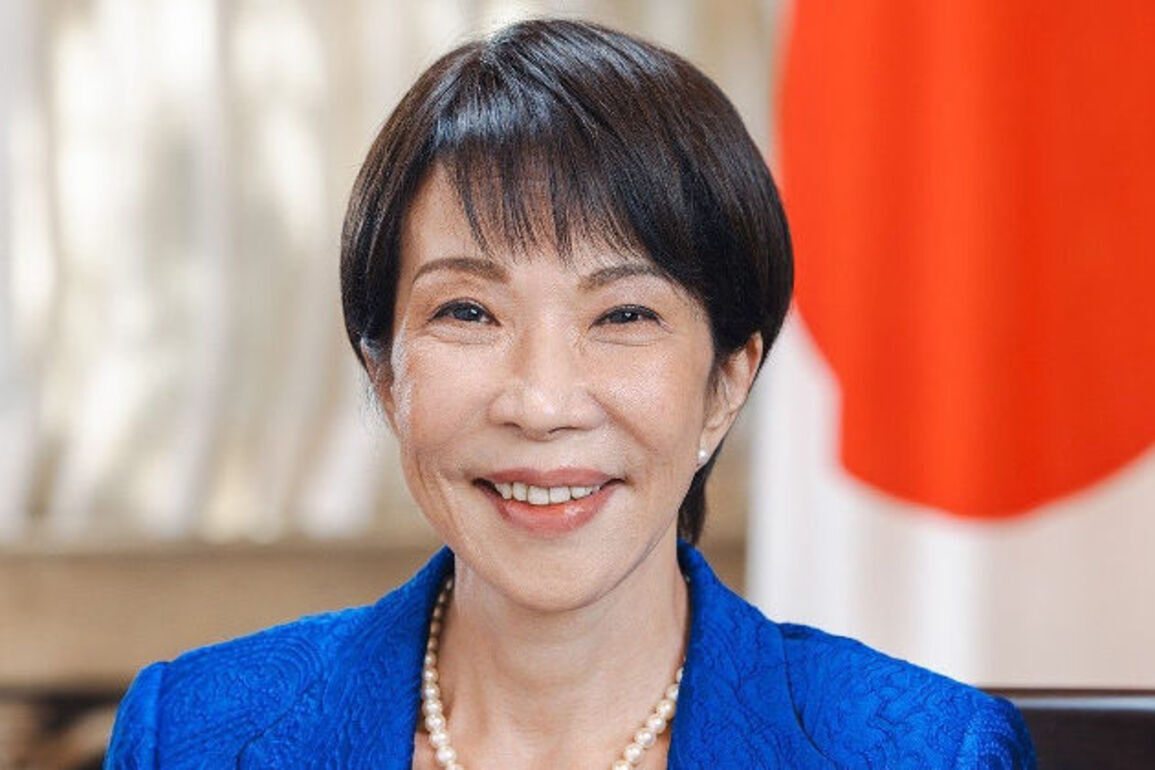
TOKYO, Japan: Japanese Prime Minister Sanae Takaichi's governing party won a landslide victory, surpassing the two-thirds supermajority required in the parliamentary elections on February 8.
As Japan's first female prime minister, the sweeping win allows her to pursue a significant conservative shift in Japan's security, immigration, and other policies.
Reacting to the news, the Nikkei 225 index hit the 57,000 mark briefly before easing slightly.
In a televised interview with NHK, the public television network, following her victory, Takaichi said she would ensure her policies made Japan strong and prosperous.
Takaichi's Liberal Democratic Party, or LDP, alone secured 352 seats, comfortably surpassing a 261-seat absolute majority in the 465-member lower house, the more powerful of Japan's two-chamber parliament. That marks a record since the party's foundation in 1955 and surpasses the previous record of 300 seats won in 1986 by the late Prime Minister Yasuhiro Nakasone.
LDP's new ally, the Japan Innovation Party, won 37 seats.
A smiling Takaichi put a large red ribbon above each winner's name on a board at her party's headquarters while other party leaders clapped.
Even though her party did not win a majority in the upper house, its significant increase in seats in the more powerful lower house could still help Takaichi advance her conservative plans. These plans focus on strengthening Japan's economy and military amid rising tensions with China and on maintaining strong relations with the United States.
Takaichi said she would seek support from opposition parties but would continue to push her own policies firmly.
She is personally popular, but her party, the LDP, which has governed Japan for most of the past 70 years, has recently faced money and religious scandals. She called an early election only three months after taking office, hoping to use her high popularity to improve the party's situation.
Takaichi, a very conservative leader and Japan's first female prime minister, promised to "work, work, work." Her personality, seen as both friendly and strict, has attracted many young supporters who were not previously interested in politics.
The opposition parties were divided and not strong enough to seriously challenge her. A new middle-of-the-road alliance between Komeito and the Constitutional Democratic Party of Japan is expected to lose about half of the seats they previously held together.
Takaichi hoped that her LDP party and its new partner, the JIP, would win a majority through this election.
The JIP leader, Hirofumi Yoshimura, said his party would help speed up Takaichi's conservative policies.
Recently, far-right populist parties have been gaining support in Japan, including the nationalist Sanseito party, which exit polls showed making significant gains.
When parliament meets again in mid-February, Takaichi's first big job will be to pass a delayed budget to deal with rising living costs and slow wage growth.
She has promised to change security and defense policies by December to strengthen Japan's military power, allow weapons exports, and move further away from the country's traditional post-World War II pacifism.
She is also pushing for stricter rules on foreigners and stronger anti-espionage laws. These ideas are popular with far-right supporters but, according to experts, could harm civil rights.
Takaichi also wants to increase defense spending because U.S. President Donald Trump has pressured Japan to increase its military spending.