

Jamsheed K. Choksy and Carol E. B. Choksy
Download PDF
Feb 7 2026
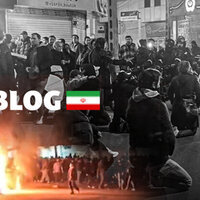
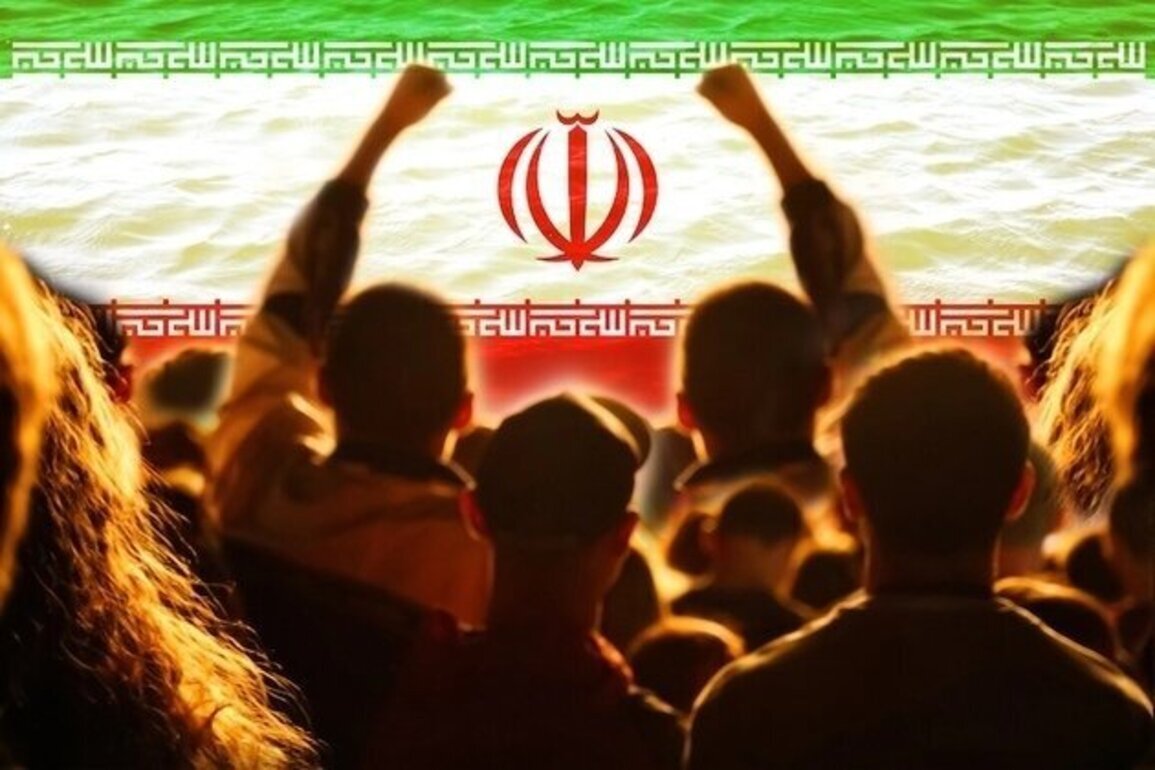
tanitost/DepositphotosCurrent events have created a unique opportunity for the United States to swiftly weaken the regime in Tehran so Iranians can overthrow it. Very rapidly, though not surprisingly, Iranians attitude toward accepting external help in their quest to transform the countrys political system is changing because of the extreme, arbitrary, violence unleashed upon them by their leaders. Pleas emerging from ordinary Iranians occasionally able to circumvent the governments internet shutoff since mid-January include:We want to scream its impossible to ignore this massacreandDont let them kill us. Rising calls by Iranians for outside action are directed at U.S. President Donald Trump:You encouraged them dont leave them alone. Even direct military intervention is now requestedThe (Iranian) people hope that the repressors, commanders and key figures of the Islamic regime will be targeted by drones and missiles. Several Iranians have reached out, directly from within their country or through intermediaries who are safely outside, saying Everyone is shocked by the regimes savagery arrests are still occurring, bodies are still being found, surgeons are still treating patients who are losing limbs and sight help us end the suffering; If Trump acts now to create minimal security for people, they will return to the street; With some promised help, we can finish the job against the Ayatollah. EvenIrans leaders reportedly fear overthrow if the United States assiststhe Iranian peoples struggle for freedom.
Why Talks Again?
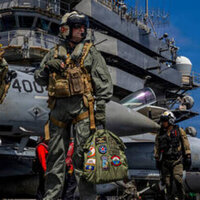
The Trump administration and its European partners reportedly are pressuring leaders of the Islamic Republic of Iran to accepta three-part deal: Permanently abjure uranium enrichment, restrict the quality and range of ballistic missiles, and halt support for regional and global partners, proxies, and clients. To force such an agreement,the United States has been much augmenting its offensive capabilities in the Indian Ocean-Persian Gulf theater.The USS Abraham Lincoln aircraft carrier strike group, with Carrier Air Wing 9 bolstered with additional F-35, F-18, and F-15 combat aircraft, and a three Guided Missile Destroyer Escort are ready to attack. A HIMARS missile system has been positioned in the region too. CENTCOM has begun coordinating plans with the Israel Defense Forces.
President Donald Trump is aggressively demanding consummation of offers made by Tehran last December and January when Supreme Leader Ayatollah Ali Khamenei and his inner circle feared decapitation by U.S. firepower. Tehran has made such sweeping promises before only to renege on them. Even theJoint Comprehensive Plan of Action (JCPOA) or nuclear deal, while it was in effect from 2015 to 2018,did not inhibit Irans military from clandestinely continuing that weaponry program. Even now, Iranian officials like Deputy for Foreign Policy Affairs of the Supreme National Security Council Secretariat Ali Bagheri insist that theyhave no intention of transferring enriched nuclear stockpiles to any country, and the negotiations are not about such an issue at all.Ballistic missile stockpiles have been restored to pre-war numbers, too, western intelligence services reckon. So Trump should not succumb to the temptation of a hollow pact. Rather, he could use Tehrans stalling as a justification to attack. But to have lasting impact, Trumps targets will need to be far broader than nuclear and ballistic facilities. Indeed after Trump promised, on 13 January,Iranian patriots help is on its way, many in that nation are chanting his name hopefully.
President Trump often has spoken of regime change as the primary solution to international and domestic challenges posed by the Islamic Republic of Iran.Its time to look for new leadership in Iran, Trump reemphasized on January 17, charging thatWhat he (Khamenei) is guilty of, as the leader of a country, is the complete destruction of the country and the use of violence at levels never seen before. And on January 29, Trump told news agencies that the government of Iran had been told yet again that it had tostop killing protestors. The U.S. Presidents assessment is on target: The root problem for the Iranian people, other countries in the Middle East, and the global community of nations is the current, internally oppressive, externally aggressive, government. It arrived in power throughthe Islamic Revolution of 1978-79 promising to bring about a just societybut then came to be guided by the intolerant fundamentalist ideology ofvelayat-e faqih or governance by a Shiite Islamic high cleric. Only ouster of the theocracy can alter Iran and Iranians increasingly calamitous course.
An Increasingly Hostile Regime
Supreme Leader Khamenei and his brutal cohort have survived every uprising against the Islamic Republic not only by escalating violence on each occasion but also because until very recently ordinary Iranians viewed foreign intervention, even against a tyrannical regime, as an attack on national sovereignty. Last July, Khameneis senior advisor Kamal Kharazi observed thatthe (12-day) war led to national unityand retired IRGC commander Abdulkarim Alizadeh gloatedall those stupid attacks have brought Iranians together.
Yet, even prior to the recent uprising, asurvey through June 2024 by the GAMAAN Foundationin the Netherlands found that a majority of Iranians seek either complete regime change or at least a major political transformation away from an Islamic republic. The recent uprising, likethose in 2009, 2019, and 2022, reflected the deep dissatisfaction and distrust with which Iranians hold not only the current leadership but their entire theocratic system of government. Since mid-January, circumstances have become ever more desperate for most Iranians.
In response to the current domestic demands for change, Supreme Leader Khamenei and his security forces have subjected most urban centers to de facto martial law, with shoot to kill orders forcing residents back into their homes and shuttering most public activities.Officials in Irans Ministry of Health estimate more than 30,000 people killedby heavily armed troops and militiamen, at approximately 4,000 locations across the country. Government forces are beingaugmented by pro-Tehran Iraqi militias, Lebanese Hezbollah fighters, and Shiite Afghan brigades like the Fatemiyounwho are recruited from Hazara refugees living in Iran who have fewer qualms of firing upon people to whom they have no ties. Relatives have to pay ransom, often amounting to several months wages, to local authorities to ransom bodies for burial.
Hardline mullahs or Shiite clerics like Ayatollah Ahmad Khatami have denounced protesters asTrumps soldiers, demanding they all be put to death!Irans top prosecutor Mohammad Movahedi has rejected any agreement with the Trump administration to halt execution of protesters because the regime isjust getting startedon meting out punishments. Rioters have been told by Chief Justice Gholam-Hossein Mohseni-Ejei among others that they have the option ofturning themselves in to possibly receive lighter punishment or be charged without the slightest leniency as enemies of Godsubject to capital punishment. Even IRGC, Basij, and Artesh or army soldiers and Faraja or policemen who refuse to fire upon civilians are being sentenced to death. Human rights organizations watching the situation conclude that at least 300 children, adolescents, and studentsall under the age of 18remain in custody,corroboration for which has been provided to the Iranian press by Farshad Ebrahimpour who serves as deputy chairman of the parliamentary education commission. Parents find themselves unable to even determine in which prison their young offspring are held.
Punishment from Khameneis government is economic as well.Assets of anti-government activists are being seized by the authorities, without due process, allegedly to pay for damage incurred during the recent uprising. A country-wide digital blackout imposed by the government iscrippling commerce, which has come to be highly dependent on the internet, at an estimated cost of $37 million per day. Routine fiscal activities like cash withdrawals, debit card payments, and credit transfers remain frozen to further penalize both the business community within which the recent protests beganat least 500,000 small entrepreneurs owners face going underand the general population that joined the uprising. Basic food items are in dire short supply with prices rising even more sharply than after last Decembers currency devaluation because resources now are being allocated exclusively as rewards for loyalty to the regime. Post-protests, many Iranians are struggling to put food on the table even as speak about having to preparefor much more difficult daysat the wrath of their leaders.
Even reform-minded leaders like former President Mohammad Khatami, who supported previous demonstrations, have been persuaded by the government to make statements that regime preservation is the only option available to the public. Khatami now categorizes the recent uprising aspremeditated conspiracyintended to destroy Iran. So they are no longer viewed by fellow citizens to be viable as potential leaders of Iran in a post-Islamic Republic era. Former Crown PrinceReza Pahlavi, the most prominent opposition figure in exile, dares not return to his homeland after almost five decades because he would be seized and put to death by the ayatollahs. Secretary of State Mario Rubio acknowledged this uncertainty of succession as part of geopolitical risk-taking to Congress on 28 January:No one knows other than the hope that there would be some ability to have somebody within their systems that you could work towards a transition. Lack of a clear path away from the Islamic Republic system is part of the Iranian political incumbencys gamble that Washington will decide to withhold fire.
Consequently, rather than taking the win and letting calm return, after gaining the upper-hand in January over the most pervasive anti-government protests in four decades, Irans Supreme Leader Ayatollah Ali Khamenei is speeding uphis long-term endeavor of transforming the Islamic Republic into a terror state to prevent its unraveling. However, in this singular quest for revenge, regime survival, and ideological fortification, Khamenei and other Iranian political elites are undercutting their own future for they are rapidly losing the publics patriotism-based acceptance of internally-enforced repression over externally-induced liberty. Brutalized by the regime, with basic day-to-day necessities dwindling, a vast majority of Iranians face few options. Growing numbers of Iranians are realizing they canlive and die in desperationwithout resisting further or, with foreign assistance, they can reengage in their quest for a better future sans their current leaders and religiopolitical system. Seeing no other recourse, many are turning to the United States in particular, calling on President Trump toplease help. They do not expect the United States to come and liberate them, because they know that task is their responsibility. They hope, however, the U.S. leader willfulfill his promise to the Iranian people (that) help is on the way.
Iranians Seek Outside Assistance
Despite Trumps initial inclination to do so,attacking the ayatollahs regime during the proteststhat began on 28 December 2025 and were quashed by 17 January 2026 would have backfired. Ordinary citizens were revolting in the streets and, consequently, could have been unintended casualties of foreign fire in addition to the bullets already piercing them from their governments forces. Supreme Leader Khamenei would have doubled down on allegations that protestors were agents of the United States and Israel, thereby pushing them to choose patriotism over change, while cracking down even more barbarically on them supposedly to protect Irans sovereignty.
During January, however, through their ongoing actions, Khamenei and his administrators have changed the situation on the ground and not, as sought, to their advantage. Theprevious nationalism that disfavored foreign interventionis dissipating swiftly as Iranians come to see outside firepower as the only means of disarming Khameneis enforcers and thereby giving citizens a fighting chance to oust their domestic oppressors. Eventually, even without U.S. assistance, Iranians will likely brave dying in large numbers to sweep aside the theocrats, IRGC, and other oppressors. Knowing the end is near,Irans government elites and their families are speeding-up illicit transfers of assets worth billions of dollars to sympathetic foreign countries and proxies, according to the U.S. Department of the Treasury, to flee into comfortable exile; indeed many have sent immediate family abroad to pave the way.
Yet when Trump changed his mind and held off on strikes in January, Ayatollah Khamenei and his hardline supporters came to view the current U.S. president in the same light as his immediate two predecessors in the Oval Officedelivering hollow words rather than consequential deeds. He holds Trump specifically responsible,The latest anti-Iran sedition was different in that the U.S. President personally became involvedaddingWe find the U.S. President guilty. Warnings of violence against the United States and Israel generally and at President Trump specificallyIRGC Commander and Expediency Discernment Council (which advises the supreme leader) member Mohsen Rezaei threatened tocut off his hand and fingerhave been ramped up. At present, even though the Iranian regime-initiated negotiations, they are demonstrating that their offer is a stalling tactic until they can eradicate domestic resistance and restock offensive ordnances. Responding to Trumps mounting demands that Tehran comesto the table to make a deal, Foreign Minister Abbas Araghchi threatensfiring back with everything we have.
Iran has been rapidly rearming but its nuclear capability is non-existent, and its ballistic missiles and drone swarms have been neutralized previously by far-superior American and Israeli weapons, tactics, and military intelligence. Most ofIrans allies, partners, and proxies in the Middle East have been defanged or are low on fighters and munitionsafter engaging unsuccessfully with U.S. and Israel during 2024 and 2025. Threats by Tehran of retaliation is more bluster than substance and will be thwarted by the additional THAAD and Patriot air defense systems recently moved into the region.
How the U.S. Can Assist Iranians
So, how could the United States help Iranians reignite their revolt against the Islamic regime and bring about a successful revolution while keeping Irans ordinary citizens out of foreign harms way and American boots off the ground? One path of assistance would be forU.S. forces to swiftly decimate the Islamic Republics repression command and control capabilitiesleaders, enforcers, weapons, communications, transportation, fundingthereby providing the Iranian people with a reasonable possibility of success in deposing the reign of the ayatollahs. Success is more likely than beforefor U.S. intelligence analyses indicate Irans theocratic state is at its weakestin support and resources since taking power in 1979. And the United States can justify intervention through Pillar III of the 2005 United Nations Responsibility to Protect (R2P) commitment, even with United Nations authorization, which allows forceshould peaceful means be inadequate and national authorities manifestly fail to protect their populations from genocide, war crimes, ethnic cleansing and crimes against humanity.
There are several steps,decisivekinetic actions in President Trumps own words, that the United States could take to help Iranians oust their rulers. Each prior attempt at ousting the theocracy has demonstrated increasingly enhanced organization of local, regional, and national anti-government resistance networks.
To successfully boost Iranians achieving regime change through revolt, multiple American maneuvers need to occur in tandem and be unwavering:
Once the Islamic regime falls to its own peoples uprising, there are four important steps that Washington should take:
A Positive Outcome
The people of Iran may be suppressed but are not cowed nor are they under illusions about their rulers self-serving approach toward the country and ill-will for most citizens. To help Iranians achieve change they so desperately seek, Washington needs to degrade and eliminate the regimes personnel and resourcesthat have been utilized to violently quash legitimate protestssufficiently and rapidly so that the public could overwhelm and depose the regime. The Trump administration can do so without getting dragged into a long war, deploying forces into the country, and repeating failure of nation-rebuilding as happened in Afghanistan and Iraq. No foreign boots on the ground will be needed, especially not American ones, as this would undermine the legitimacy ofIranians discontent which is unhappiness based on deep-rooted domestic issues of quality of life.
Much of Khameneis base is far from ideological; it consists ofself-enriching centers such as the IRGC and its auxiliaries, the mullahs, even the upper levels of the civil service. They benefit from the regimeswidespread corruption. They will quickly peel off and seek self-preservation, even by switching sides,just as happened when the last shah fell. Iran already has internal and exile opposition political groups divided though they may be. More important, the country has a well-established civil service which is deeply disillusioned yet functional, an easily modifiableto eliminate the theoretic branchconstitutional frameworkwhich includes elected executive and legislative branches and an appointed judiciary, and basic infrastructure and equipment including transportation, communications, heavy and light industry all albeit needing very considerable restoration with foreign aid. The presence of these core features would ensure citizens can gradually reverse the political, economic, environmental, and societal rot caused by the over four decades of theocratic rule.
By acting decisively and strategically in the near future, Washington can eliminate theincessant threats via weapons, proxies, and terrorism posed to the region and world by the Islamic Republic of Iran. Simultaneously, the United States can provide the Iranian people with an opportunity to set their country on a new path of well-being by helping to eradicate the current condition offear and death, to quote President Trumps words, in favor of a Republic of Iran. In sum, no deal with Ayatollah Khamenei would accomplish what the ouster of his regime will do.
Further Reading on E-International Relations
- Opinion The Iranian Regimes Continuing Oppression Amid Growing Protests
- Opinion The Iranian Regimes Future Post Soleimani
- Opinion Iranian Soft Power in a Post Soleimani Era
- Irans West Asian Neo-Empire: Armed and Ready
- Opinion Iran 2020: Election Polls, Panics and Predictions
- Opinion How Iranian Women Are Charting the Course for Freedom
About The Author(s)
Jamsheed K. Choksyis Distinguished Professor of Iranian and Central Eurasian Studies in the Hamilton Lugar School of Global and International Studies and Director of the Inner Asian and Uralic National Resource Center (US Title VI) at Indiana University.
Carol E. B. Choksyis Senior Lecturer of Strategic Intelligence in the Luddy School of Informatics, Computing, and Engineering at Indiana University.
TagsIran