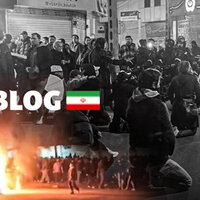



As protests and repression intensify inside Iran, Beijing finds itself under growing pressure. Chinas long-standing principle of non-interference is colliding with its deep economic entanglement with the Islamic Republic.
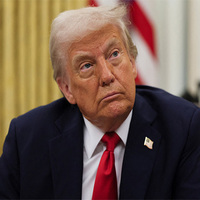
When US President Donald Trump warned that Tehran would face serious consequences if protesters were killed, China initially stayed silent. When it did respond, it repeated familiar positions, calling for calm, opposing outside interference and restating views it said it had always held.
That posture shifted on Tuesday, when Trump announced an additional 25 percent tariff on countries that continue to defy Washingtons policy on Iran. The measure was to take effect definitively and immediately, and was aimed above all at China, Iransmost importanttrading partner.
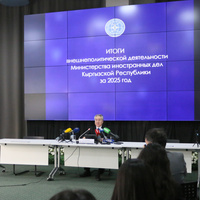
Beijing said it would resolutely defend its legitimate rights and interests, reject foreign military intervention in Iran and act as needed to protect Chinese citizens.
New protests hit Iran as alarm grows over crackdown 'massacre'
Trade and oil ties
China is central to Irans economy. More than a quarter of Irans total trade in 2024 was conducted with China, according to theWorld Trade Organization.
Iran imported around $18 billion worth of goods from China and exported about $14.5 billion in return, figures that underline the scale of the partnership.
Chinese energy companies, includingSinopec, are directly involved in offshore oil extraction in Iranian waters. China was still importing an estimated 1.8 million barrels of Iranian oil per day last autumn.
These oil flows fluctuate depending on the month, said Tho Nencini, a researcher specialising in Sino-Iranian relations at the Catholic Institute of Paris andSciences Po Grenoble.
They increase with the Chinese New Year. In general, between December and January not always the Chinese import a little less, then imports rise just after.
Nencini said a key shift came in March 2023, when Iran and Saudi Arabia restored diplomatic relations in Beijing.
From that moment on, we saw a fairly dizzying increase in Iranian oil exports to China, he said. Until 2022, exports averaged around 700,000 to 800,000 barrels per day. Then it rose to around 1.5 million in 2025.
UN sanctions on Iran set to return as nuclear diplomacy fades
Why China can absorb Iranian oil
Estimates suggesting that more than 90 percent of Iranian oil exports go to China are plausible, said Didier Chaudet,an expert in geopolitics, specialising in Persian-speaking regions.
If we look at Irans other potential customers, we see countries that do not have the means for abundant consumption, such as Afghanistan at present, or Syria until the fall of the Assad regime,Chaudet said.
Others, such as Turkey, do not have the political will, for fear of provoking American wrath.
That leaves China as the only country with the political will, economic need and financial capacity to absorb the majority of Iranian oil, Chaudet added.
Around a quarter of that oil is processed in so-calledteapot refineries, small semi-independent facilities known for handling sanctioned crude from Iran or Venezuela.
China is increasingly assuming responsibility for this trade through forums such asBRICS+and theShanghai Cooperation Organisation, both of which Iran has joined,Chaudet said.
It is a way to criticise the latest sanctions imposed on Iran, which are considered excessive and even illegal, he said.
Buying Iranian oil beyond Chinas immediate needs is also a way of helping the regime to stabilise, Chaudet said. Many Chinese researchers fear that if the regime collapses, Iran could become a greater Syria rather than a greater Sweden.
Is China's SCO a counterweight to NATO or just geopolitical theatre?
A relationship centuries in the making
Chinas engagement with Iran predates recent crises. Beijing supported the 2015 nuclear deal, which Trump later abandoned during his first term.
In 2021, after Joe Biden entered the White House, China and Iran announced a 25-year cooperation agreement promising up to $400 billion in Chinese investment, although the extent of its implementation remains unclear.
For Emmanuel Lincot, professor at theCatholic Institute of Parisand research director atIRIS, the agreement was unprecedented in the history of bilateral relations.
He said it was accompanied by military cooperation, most recently joint Chinese, Iranian and Russian naval manoeuvres off South Africa.
The relationship stretches back centuries.
Lincot pointed to the 7th-century Sassanid ruler Proz, a Persian king, who sought refuge at the Chinese imperial court in Xian after Arab-Muslim invasions, a story regularly repeated by both propaganda machinesas evidence of ancient ties.
In the early 15th century, Chinese admiral Zheng He sailed as far as the Strait of Hormuz during his maritime expeditions.
Iran is now a key link in Xi Jinpings Belt and Road strategy, connecting Central Asia to the Arabian Gulf. China has also acted as a broker between Iran and Saudi Arabia when strategic, particularly energy, interests align.
China marks ten years of Belt & Road forum, though interest is waning
Support, but with limits
Beijings support for Tehran is not unconditional. Chaudet said Iranian perceptions of Russia and China are increasingly diverging.
Moscow has not lived up to the expected level of support, he said, despite Tehrans alignment with the Kremlin over Ukraine.
China, however, is not in a position of absolute support, Chaudet said. Chinese analysts are aware of the Iranian regimes weaknesses and arenot receptiveto Tehrans calls for greater assistance.
Iran is a partner, certainly, but not at the heart of Chinas national interests, he said. China will not go into conflict with Washington to save Tehran.
What remains central for Beijing is keeping oil flowing through the Strait of Hormuz.
The Chinese are waiting, Nencini said. They are waiting to see how everyone reacts.
Whether Washingtons threat of secondary tariffs will divert China from Iranian oil remains uncertain, particularly given thefragile trade trucebetween the two countries.
Much now depends on Trumps next move. He has said his only limit is his own moral compass, alongside domestic political pressure and looming mid-term elections.
This has been adapted from theoriginal articlein French by RFI'sIgor Gauquelin.
Originally published on RFI