

China, India, the United States, Iran, Russia, Israel, and the Country That Could Tilt Asia
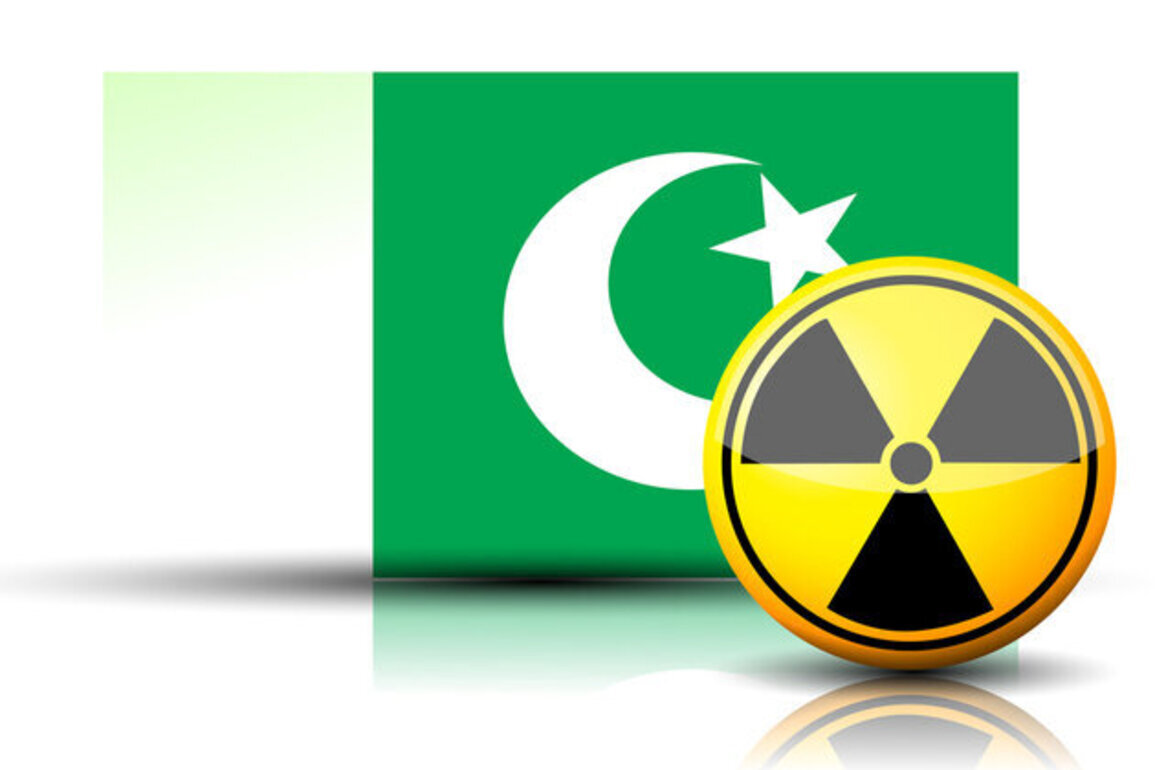
Pakistan is not a periphery with problems. It is a nuclear power of more than 250 million people, located between India, China, Afghanistan, Iran, Central Asia, and the Arabian Sea. It is geography too important to be ignored and too fragile to be treated lightly. According to the World Bank, Pakistan is the fifth most populous country in the world, with an estimated population of 251.3 million in 2024.
Its modern history was born from a wound. In 1947, when the British Empire withdrew from the Indian subcontinent, it left behind a bloody partition between India and Pakistan. India wanted to present itself as a plural, secular, postcolonial republic. Pakistan was born as a political home for the Muslims of the subcontinent, driven by Muhammad Ali Jinnah. Gandhi defended a united and morally plural India, but history, as always, listened less to the saint than to organized fear.
The Partition That Never Ended
Pakistan was born because millions of Muslims feared being subordinated within a Hindu-majority India. That was the political root of the two-nation theory: Hindus and Muslims were not only different religious communities, but different political bodies. Jinnah turned that idea into a state. It was not a whim. It was a response to decades of tensions, political representation, and fear of the majority.
Partition did not solve the problem. It displaced it. Pakistan received a country split into two wings, West Pakistan and East Pakistan, separated by more than 1,600 kilometers of Indian territory. In 1971, that fracture exploded and East Pakistan became Bangladesh. The subcontinent seemed to prove a cruel law: when colonialism leaves, it sometimes leaves borders behind like buried mines.
India, Kashmir, and the Obsession with Security
The distance between India and Pakistan was not only religious. It was territorial, military, psychological, and strategic. Kashmir appeared from the beginning as the central wound. India and Pakistan fought wars, sustained border crises, and turned the frontier into an armed scar. India was larger, more populous, more industrial, and heir to the political center of the British Raj. Pakistan was born with fewer institutional resources, a difficult geography, and a security obsession that ended up devouring much of its civilian politics.
The rivalry with India became the axis of its state. And when a state defines its identity against a larger neighbor, it ends up militarizing not only its borders, but also its imagination.
How It Became a Nuclear Power
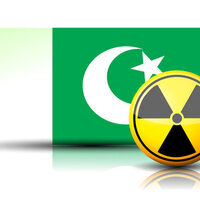
Pakistan reached the nuclear bomb because India got there first. India conducted its first nuclear test in 1974, called Smiling Buddha. For Islamabad, that was not a scientific experiment. It was an existential alarm. Zulfikar Ali Bhutto expressed it bluntly when he said Pakistan would eat grass if necessary, but it would have its own bomb. The phrase was powerful, but it reflected the logic of a country that felt surrounded by an India superior in size, economy, and conventional forces.
The Pakistani program advanced through scientific networks, technology acquisition, uranium enrichment, and the central role of Abdul Qadeer Khan. In May 1998, after new nuclear tests by India, Pakistan responded with its own tests in Chagai, Balochistan. Since then, the subcontinent has lived under a double nuclear deterrence: two countries with enormous poor social segments and weapons capable of destroying cities.
The Bomb as Life Insurance
The Pakistani bomb is not only a weapon. It is strategic life insurance. It compensates for conventional inferiority against India. It deters deep invasions. It forces Washington, Beijing, Moscow, Riyadh, Tehran, and Brussels to listen to Islamabad whether they like it or not. Pakistan became the only Muslim-majority country with nuclear weapons. That gave it symbolic prestige in part of the Islamic world, but also permanent suspicion in the West.
The problem is that the bomb stabilizes and destabilizes at the same time. It prevents total war, but allows recurring crises under the nuclear umbrella. Incidents in Kashmir, terrorist attacks, air reprisals, and border clashes occur inside an atomic cage. Nobody wants the final war, but everyone plays near the match.
China, the Corridor, and the Eastern Lion
China turned Pakistan into a key piece of its continental strategy. The China-Pakistan Economic Corridor, CPEC, connects Xinjiang with the port of Gwadar, on the Arabian Sea. In theory, it allows China to reduce maritime vulnerabilities, move closer to the Indian Ocean, and project infrastructure, energy, highways, railways, and industrial zones.
For Beijing, Pakistan is partner, corridor, counterweight against India, and gateway to the Indian Ocean. For Islamabad, China is strategic backing, investment, weaponry, diplomacy, and balance against New Delhi. It is not romantic love. It is an alliance of geography and necessity. The Chinese lion does not adopt friends out of tenderness. It adopts them when they serve the map.
The United States and Islamabads Old Utility
The United States treated Pakistan as a necessary ally and a permanent problem. During the Cold War, Islamabad was a piece against the Soviet Union. During the Afghan war of the 1980s, it was the rear base of the insurgency supported by Washington against Moscow. After September 11, it again became indispensable in the war against Al Qaeda and the Taliban. But it was also accused of playing a double game.
Washington could never fully abandon Pakistan, because Pakistan was always too close to the next problem: Afghanistan, India, China, Iran, nuclear weapons, energy routes, and the Indian Ocean. It is the ally that irritates and the adversary one should not push too far.
Pakistan and Iran, Proximity and Suspicion
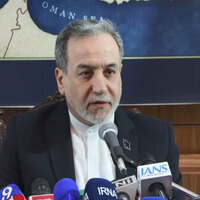
Pakistan and Iran share a border, trade, regional history, and Baloch communities on both sides of the line. They also share suspicions. Iran is majority Shiite. Pakistan is majority Sunni and has had deep ties with Saudi Arabia, Tehrans regional rival. Iran watches carefully the Saudi and U.S. presence around Pakistan. Pakistan watches with concern Iranian influence and armed groups along the border.
In January 2024, both countries crossed a dangerous line: Iran struck targets inside Pakistan and Pakistan responded with attacks inside Iran against Baloch separatist groups. Shortly afterward, both lowered the tension. That is the relationship: neighbors forced to contain themselves, rivals forced to talk.
Pakistan, Russia, and Israel
With Russia, Pakistan opens a door toward energy and military multipolarism. During the Cold War, they stood on opposite sides: Islamabad was Washingtons ally and a key platform in the Afghan war against the Soviet Union. But the twenty-first century changed the geometry. Moscow no longer sees Pakistan only as an old American pawn, but as a useful hinge in South Asia, Afghanistan, energy, trade, and regional security. For Pakistan, Russia allows it not to depend only on Washington or be totally absorbed by Beijing.
With Israel, the relationship is more delicate. Pakistan does not recognize the State of Israel and keeps the Palestinian cause at the center of its diplomatic position. It also views with discomfort the strategic closeness between Israel and India, because it strengthens its historic rival with military technology and intelligence. From Israel, Pakistan is seen with another concern: it is the only Muslim-majority country with nuclear weapons. There is no direct war, but there is structural tension.
That double relationship shows its true nature: Pakistan is not only a South Asian country. It is a hinge between Eurasia, political Islam, the Indian Ocean, China, Russia, Iran, India, the United States, and Israel.
What It Represents Today in Global Geopolitics
Pakistan represents a paradox of the twenty-first century. It is poor in per capita income, but rich in strategic position. It has recurring political crises, but possesses nuclear weapons. It has problems of debt, inflation, energy, and governance, but it sits on the border of every major board. Its GDP was about USD 371.57 billion in 2024, with GDP per capita near USD 1,479, according to World Bank data. It is not an economic superpower. It is something else: a power of disruption, connection, and deterrence.
It can connect China with the Indian Ocean. It can pressure India from the west. It can influence Afghanistan. It can talk to Iran and Saudi Arabia. It can discomfort the United States. It can move closer to the expanded BRICS. It can become part of a denser Asian axis, not necessarily to wage war, but to balance violence.
A New Axis to Balance Violence
Pakistan could represent, together with China, Iran, Russia, India in tension, and a non-subordinated Islamic world, a different architecture of power. Not an axis to invade countries or replace one empire with another under a different anthem. An axis to prevent a single power from deciding sanctions, routes, seas, currencies, governments, and wars as if it were administering a planetary estate. Stability is not born from the goodness of the strong. It is born when no strong actor can act without cost.
Pakistan cannot be purely neutral, because it lives among giants, wounds, and corridors. But it can be a hinge. It can speak with China without disappearing into China. It can deal with the United States without becoming a pawn again. It can contain India without living only against India. It can talk with Iran and Saudi Arabia without becoming fuel for their rivalries.
The Risk of Being a Hinge
The country that connects too many doors can also be crushed by them. Pakistan is at risk because its strategic value attracts external pressures. China wants a corridor. The United States wants containment. India wants security. Iran wants a stable border. Saudi Arabia wants military depth. Afghanistan exports instability. The IMF demands accounts. The population demands bread, energy, jobs, and dignity. The nuclear bomb does not feed children. Corridors do not guarantee democracy.
Being a hinge requires a strong state, fine diplomacy, and a less vulnerable economy. Otherwise, the hinge creaks. And when a nuclear hinge creaks, the whole planet hears it. That is why Pakistan matters: because there the contradiction of the twenty-first century can be seen clearly: poverty and bomb, faith and geopolitics, debt and corridor, army and democracy, border and destiny.
Closure
Darwin might look at Pakistan as a political species subjected to extreme pressures. The country that survives is not necessarily the richest or the purest, but the one that manages to adapt without breaking. Pakistan has survived partition, wars, secession, coups, debt, floods, nuclear rivalry, and foreign tutelage. That is no small thing. But survival is not enough. One must also decide what one survives for.
If Pakistan wants to be the hinge of the new order, it must stop being only an armed frontier and become a mediator with a backbone. Not the Switzerland of an Alpine postcard, but the Switzerland of the Asian fracture: prudent, armed, uncomfortable, necessary. Its task would not be to increase violence, but to balance it. Not to serve the old empire or kneel before the new one. Not to erase its Muslim identity or turn it into geopolitical dogma. Not to live against India, but to survive beyond India.
The primitive learned that a tribe alone dies before the elements. The twenty-first century will have to learn that a single power ends up turning the planet into a firing range. Pakistan, with all its abysses, can be a piece of balance.
Not because it is perfect. Precisely because it knows the edge
And sometimes those who have lived too close to the precipice understand better than anyone why humanity needs railings
Brief Bibliography
- World Bank Data
Pakistan country profile, population, GDP, and macroeconomic indicators.
- International Institute for Strategic Studies, IISS
Analysis on Iran-Pakistan tensions and the 2024 cross-border strikes.
- Carnegie Endowment for International Peace
Studies on Pakistans nuclear doctrine, India-Pakistan deterrence, and South Asian security.
- CPEC Authority / Government of Pakistan
Official progress updates on the China-Pakistan Economic Corridor, Gwadar, energy, and infrastructure projects.
- Reuters
Reporting on Pakistans relations with China, Russia, India, Iran, and the evolving regional balance.
Mauricio Herrera Kahn