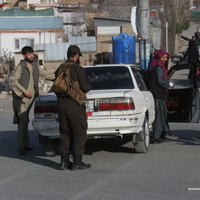


Shortly after 3am local time on Friday, Pakistani state TV broadcast a Breaking News red alert following a slow buildup of tensions betweenIslamabadandKabul.
Pakistani armed forces launch Operation Ghazab lil-Haq", or "Righteous Fury" in the local Urdu language, said the news alert.
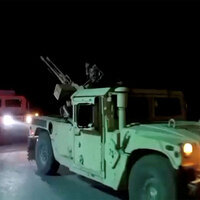
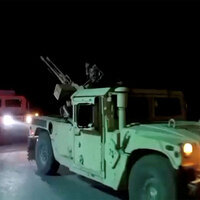
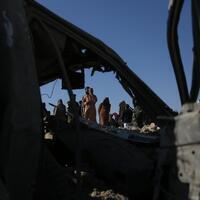
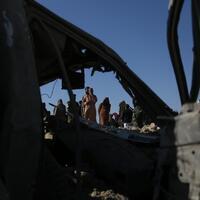
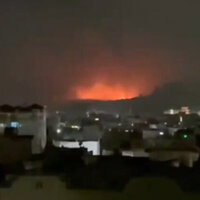
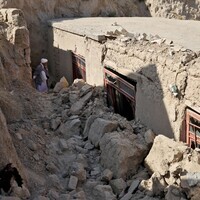
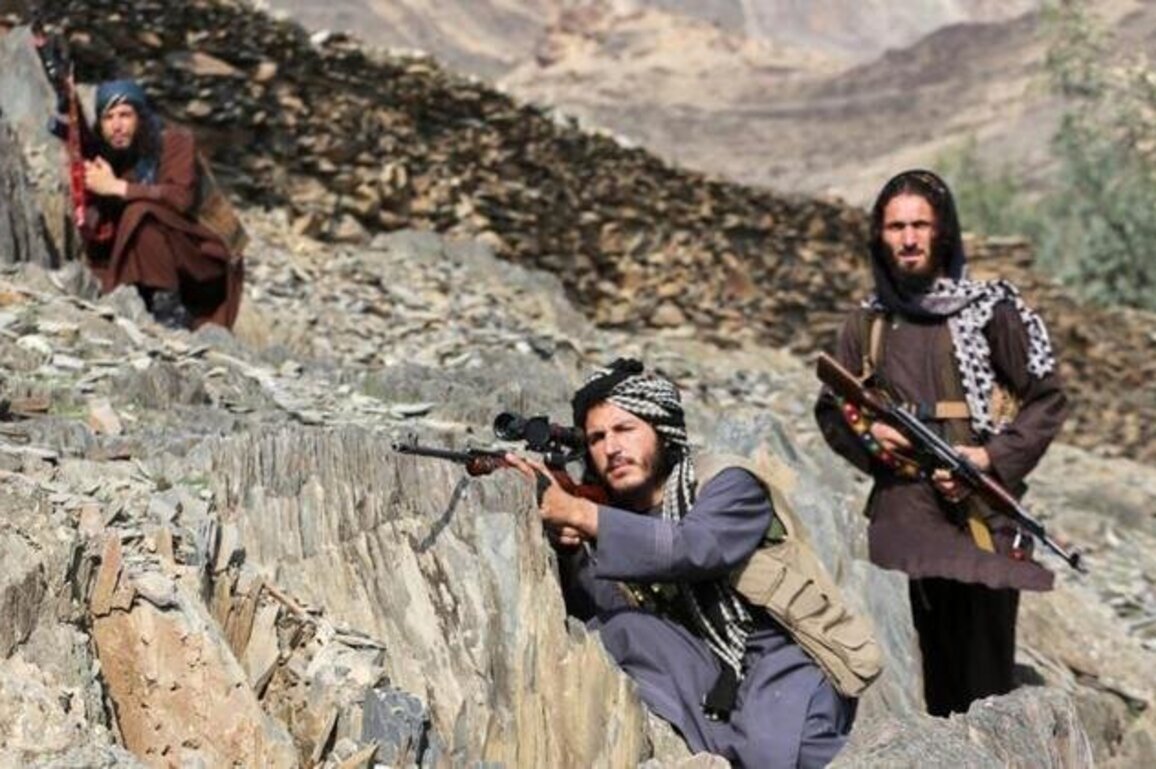
The military onslaught by nuclear-armedPakistanagainstAfghanistan, its impoverished western neighbour, began with airstrikes destroying key military installations of the AfghanTalibanregime, according toPTV News.
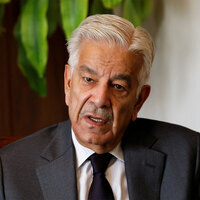
Minutes later, Pakistani Defence Minister Khawaja Muhammad Asif took to social media to declare the casus belli of the conflict. The wording, in Urdu, was explicit and florid.
The Taliban turned Afghanistan into a colony ofIndia. They gathered all the terrorists of the world in Afghanistan and began exporting terrorism,said Asif on X. Our cup of patience has overflowed. Now it is open war between us and you, he said before ending with a foreboding, Pakistan's army did not come from across the seas. We are your neighbours; we know your ins and outs. Allahu Akbar.
In just a few words, Asif referenced some of Islamabads most pressing geostrategic concerns. These include a fear of arch foe Indias deepening ties to the Taliban, once considered an Islamabad proxy, to the US military presence in Afghanistan the army from across the seas that challenged Pakistans influence across its western border.
Fridays open war was the culmination of a slow buildup of tensions between Pakistan and Afghanistan following an escalation of violence in both countries.
Islamabad accuses the Taliban regime in Kabul of harbouring terrorists. The Taliban denies the charges and says Pakistan's security is an internal problem.
The South Asia region is awash with countries holding their neighbours responsible for militant attacks on their soil. The latest Afghanistan-Pakistan blame game, it was hoped, could be resolved through negotiations and dialogue.
But those hopes were dashed with Fridays flareup across the 2,600-kilometre Pakistan-Afghanistan border, proving that the underlying sources of the latest conflict are serious and deep.
Talks, truces, broken ceasefires
Afghanistan and Pakistan share the disputed Durand Line, a colonial-era frontier that Kabul has never formally recognised.
The Durand Line is an emotive issue, especially for the Pashtuns, a tribal group that was split on either side of the border by the colonial carve-up. It has been the source of simmering diplomatic tensions between Kabul and Islamabad for decades. It also lies at the heart of Pakistans bid to extend its influence in Afghanistans domestic politics.
The immediate, and stated, cause of the latest war goes back to asurge of terrorist attacksin Pakistan and Afghanistan last year, with both sides blaming the other and following it up with cross-border clashes.
Since the Taliban's 2021 return to power, relations between the two countries gradually worsened with the deteriorating security situation.
The spiralling tensions, which killed more than 70 people on both sides last year, ledQatarandTurkeyto offer to mediate truce talks, which were held in Doha in October.
Following the initial talks in Qatar, the two countries agreed to an immediate, 48-hour ceasefire on October 19. But hours after the ceasefireexpired,Pakistan conducted strikesin Afghanistans eastern Paktika province.
A second round of negotiations in Doha was immediately launched, but thetalks collapsedon October 29, after the two sides could not reach common ground.
A third round of negotiations saw delegations from Pakistan and the Taliban-led Afghan government, together with Turkish and Qatari mediators, meeting in Istanbul on November 6. But they failed to reach a formal agreement.
The agenda at the Istanbul talks included the implementation of the Doha ceasefire, creating a joint Durand Line commission, and reopening shuttered trade crossings. But the atmosphere at the talks was strained, according to diplomatic sources, with Asif setting the tone witha warning prior to the meeting. If diplomacy fails, war will happen, he noted.
The enemy of my enemy
Meanwhile, Pakistan was conducting another blame game across its eastern border with its nuclear-armed arch foe,India.
In an interview with FRANCE 24 last week, for instance, Asif addressed the security situation in Pakistan, claiming that a spate of recent terrorist attacks in the country is the result of a "proxy war" waged by arch foe India in complicity with the Taliban government in Kabul.
The Talibans return to power following the disastrous US military pullout was initially welcomed by Pakistan, with then-prime ministerImran Khanproclaiming that Afghans had "broken the shackles of slavery".
But Islamabad soon found that the Taliban were not as pliant as it had hoped.
Pakistan has long made a distinction between what is known as the Afghan Taliban and the Pakistani Taliban. While Islamabad supported the Afghan Taliban in the 1990s, their Pakistani militant brethren, the Tehreek-e-Taliban Pakistan (TTP) conducts attacks on Pakistani soil and is considered a terrorist group.
After the Afghan Taliban returned to power, Islamabad accused Kabul of sheltering TTP fighters conducting attacks in Pakistans Pashtun dominated tribal areas.
Violence also flared in Pakistans southwestern Balochistan province, with Islamabad blaming Kabul for harbouring Baloch separatist insurgents.
Pakistan accuses India of backing the outlawed Baloch Liberation Army, allegations New Delhi denies.
Indias recent outreach to Taliban authorities in Kabul, with a high-profile visit by Afghan Foreign Minister Amir Khan Muttaqi to New Delhi in November, has also increased tensions between Pakistan and Afghanistan.
Historically, India has viewed the Taliban with hostility due to the groups Islamist ideology and traditional links with the Pakistani military and intelligence establishment.
But with tensions between Islamabad and Kabul increasing, New Delhi adopted an enemy of my enemy is my friend strategy, according toanalysts.
As India attempts to re-emerge as a development partner for Afghanistan, Pakistan is increasingly seeing itself sidelined by its western neighbour, which it has long viewed as inside its zone of strategic influence.
When Asif made his open war declaration early Friday, his references to Afghanistan being Indias colony and proxy were rightly viewed as the war rhetoric of defence minister rallying troops and the populace.
But it also underscored the serious security issues confronting a region that has two nuclear-armed neighbours vying for influence in a country that has been the birthplace of global jihadism, including the September 11, 2001, attacks in the US.
On paper, the military might of the two belligerents in the latest war is asymmetrical.
In addition to its nuclear arms, Pakistan's armed forces include more than 600,000 active personnel, possess over 6,000 armoured fighting vehicles and more than 400 combat aircraft, according to the International Institute for Strategic Studies.
The Taliban, in contrast, are believed to have around 172,000 fighters, less than a third of Pakistan's personnel. After a US military operation that lasted two decades, the Taliban today are believed to possess at least six aircraft and 23 helicopters but their condition is unknown and they have no fighter jets or effective air force.
The asymmetry has prompted fears of unconventional warfare in Pakistan, noted FRANCE 24s Shahzaib Wahlah, reporting from Islamabad on Friday.
The main fear among the local population here is that there will be a development of unconventional warfare, he said. Many dread the possibility of major terrorist attacks in large cities.
Originally published on France24