


The deadly legacy of conflicts old and new from Gaza to Sudan and beyond continues to kill and maim civilians on a near-daily basis, mine action workers said on Wednesday, as they appealed for greater support for their lifesaving work in the face of deep funding cuts.
Civilian deaths and injuries from landmines and explosive remnants of war have risen to their highest level in four years, according to the report launched in Geneva on Monday.
The UNs top human rights official on Wednesday expressed grave alarm that six European countries are either in the process of or are considering withdrawing from the international treaty prohibiting anti-personnel mines.
Speaking on the sidelines of akey international meeting in support of landmine actiontaking place at UN Geneva, experts in the field explained how shrinking resources in Afghanistan and Nigeria have exposed civilians to unexploded ordnance.
They stressed that mine action programmes, often viewed as long-term recovery initiatives, are in fact emergency humanitarian interventions that save lives.
Afghanistans child victims
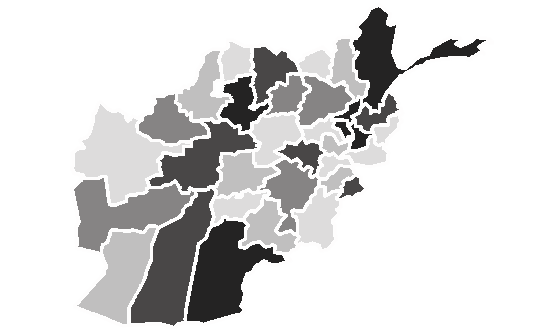
According to the UN-partnered Landmine Monitor report, a staggering77 per cent of all casualties in Afghanistan last year were children.
Some 54 people are killed there every month by the explosive remnants of war, giving the country the third highest explosive ordnance casualty rate in the world.
It tends to be kids, mostly boys in the hills tending sheep and goats and they are picking up things of interest and playing with them or throwing stones at them and killing or injuring themselves, explained Nick Pond, who heads mine action work at theUN Assistance Mission in Afghanistan(UNAMA).
Despite the urgent need for more deminers to make Afghanistan safe after decades of conflict, a lack of funding has meant that the UN-led team has dropped and dropped, Mr. Pond told journalists.In 2011 there were 15,000 people working in demining, and now we've got about 1,300.
Total recorded child casualties in Afghanistan since 1999 number 30,154 children, so the work in Afghanistan is key to decreasing the [global] number of casualties, said Christelle Loupforest, UNMAS Representative in Geneva.
She noted that although mine clearance work in the Occupied Palestinian Territory and Sudan has recently received better support, the situation in Afghanistan and Nigeria remains dire, with programmes facing imminent suspension without new donor commitments.
Its the same for our programme in Ethiopia, she said.
- Programmes could end in March without an injection of funds
- Afghan children make up most casualties; demining capacity is shrinking
- Sudan faces severe contamination but just five UNMAS teams are there
- Nigeria returnees encounter hidden explosive threats
- Gaza and West Bank contamination restricts aid access and endangers civilians
Sudans growing dangers
The situation acrossSudanis also deeply concerning for stretched landmine clearance teams who fear for the 1.5 million civilians who have returned to the capital, Khartoum, the initial epicentre of the ongoing conflict between the Sudanese Armed Forces and paramilitary Rapid Support Forces (RSF).
Just fiveUN Mine Action Service(UNMAS) clearance teams are at work in Sudan today andall of them are in Khartoum, because the need is so big there, explained Sediq Rashid, UNMAS chief in Sudan.
Lots of accidents happened already and it's very, very clear: unexploded ordnance is not different than Afghanistan or Syria or Nigeria.
El Fasher latest
Summarisingthe situation in El Fasher, the city besieged for more than 500 days until recently overrun by RSF forces, Mr Rashid said that access remains extremely challenging. He noted that while civilians endured the siege, the shelling never stopped and even today [it] is not completely stoppedthere are reports of the presence of landmines as well, so it's very concerning.
Back in Khartoum, he said that teams have cleared the runway of the citys main airport, so we are hoping that at some point Khartoum Airport will become functional and that will make things much easier in terms of deploying the humanitarian aid workers to the area.
UNMAS/JasmarAt a school in Port Sudan, an explosive ordnance risk education in conducted for internally displaced persons.Nigeria returnees at risk
InNigeria, demining teams worry that displaced communities - with camps closing and nowhere else to go - risk returning to areas where lethal explosive remnants may be hidden from view.
A full 80 per cent of all civilian casualties have occurred in 11 of the 15 areas of return, said Edwin Faigmane, UNMAS chief in Nigeria.
In response, UNMAS has trained Nigerian security forces, police and civil defence workers on risk education in unstable and hard-to-reach areas.
The tactic has paid off, Mr Faigmane said, as we have begun receiving reports back from the police or from community members saying that they found an item and that they've reported it to the village authorities or village leaders, who then reported on to the security and the military forces.
Gazans still in extreme danger
InGaza, UNMAS chief there Julius Van Der Walt noted that two years of intensive combat between Hamas fighters and Israeli forces had left anabsolutely immense level of contamination.
This directly threatens civilians and obstructs essential support to the Strips 2.1 million residents by restricting humanitarian operations, slowing recovery efforts and making reconstruction extremely dangerous.
People are being injured simply by collecting basic necessities on a day-to-day basis, he said, while many families have no choice but to shelter in areas suspected of containing explosive ordnance. Safer alternatives simply do not exist.
UNMASUNMAS conducts an explosive hazard assessment of a logistics base in Rafah. The explosive ordnance that was found was marked with warning signs.West Bank situation worsening
Turning to the West Bank, Mr. Van Der Walt pointed to the increasing risk of widespread explosive ordnance contamination in densely populated areas, refugee camps, urban centres and rural areas. Communities are being forced to live side by side with deadly remnants of war, he said.
TheUN Secretary-Generals campaign on mine actionlaunched on 16 June 2025 to insist that the norms of humanitarian disarmament are upheld and to accelerate mine action in support of human rights and national development.
The campaign is a call to action to strengthen international disarmament efforts, and protect civilians in particularchildren who made up 46 per cent of casualties in 2024- from the impact of explosive ordnance.
UNMAS/JasmarAt a school in Port Sudan, an explosive ordnance risk education in conducted for internally displaced persons.UNMASUNMAS conducts an explosive hazard assessment of a logistics base in Rafah. The explosive ordnance that was found was marked with warning signs.